
Injection mold trials are pivotal in the manufacturing sector. They ensure molds produce parts that meet design specifications and quality standards. By identifying and addressing potential issues early, these trials enhance production efficiency and product reliability.
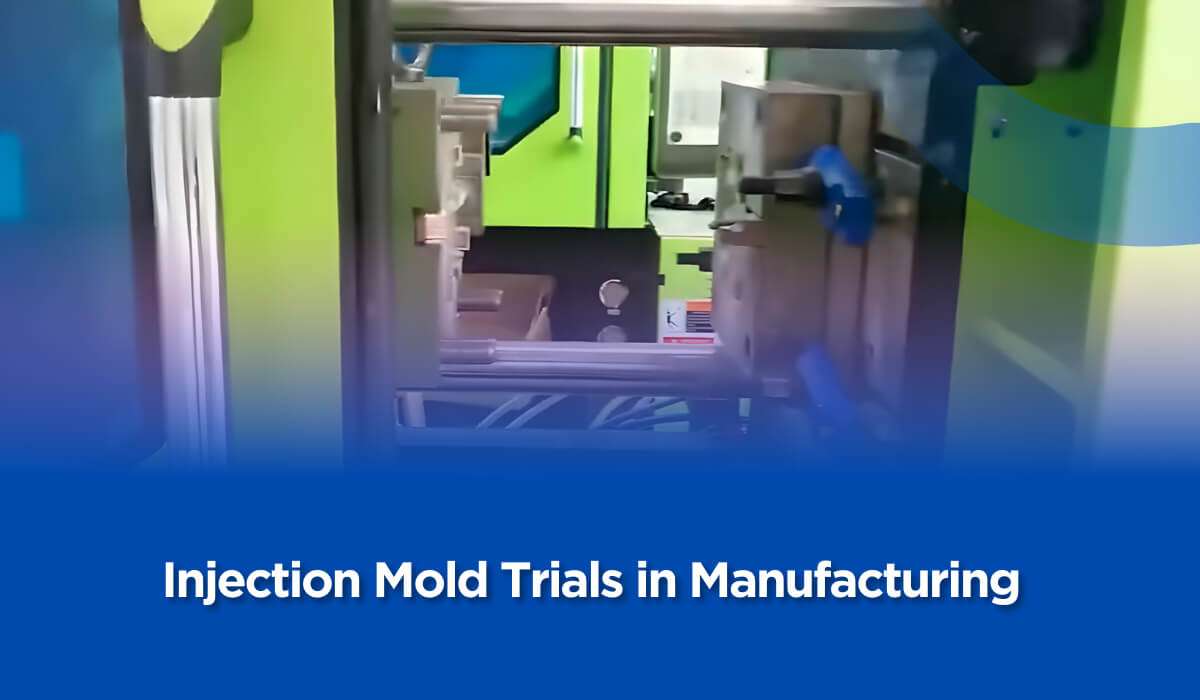
Injection mold trials in manufacturing
What will you learn in this blog?
In this blog, we’ll explore the purpose of injection mold trials, the various stages involved, and the key steps in the process, providing a comprehensive understanding of their critical role in manufacturing.
Purpose of Injection Mold Trials
Injection molding trials are critical in manufacturing, as they have several uses in producing the best parts.
Verification of Mold Design and Functionality
When considering the question of full-scale production, one should also evaluate whether the structure of a mold is reasonable and scientifically justified. This verification also proves that the mold described in this paper is feasible for injection molding, indicating that the molded parts can match the design requirement without defects.
Identification of Potential Issues
Mold trials also help us identify issues that might commonly cause concern, such as injection imbalance, cooling issues, defects in venting, and instances of molding complexity. If detected early, such problems require correction before they develop into problematic defects that may threaten the quality of the product.
Optimization of Molding Parameters
Setting the right injection speed, pressure, and temperature is essential, as these will affect the quality of the final product. These parameters can be well-optimized in mold trials to achieve high production efficiency and quality output.
Stages of Mold Trials

Stages of mold trials
Injection mold trials are in systematic steps in order to verify that moulds generate parts to the design requirements and quality appropriate. All these stages have their unique goal of confirming and reconfirming the mold before running mass production.
T0 Mold Trial
The T0 mold trial refers to the first test a manufacturer coveys in its production line before its release to the market. In other words, it is the most rudimentary of all testing methodologies designed to evaluate the mold’s performance and potentially discover severe problems. This stage ensures the mold is used correctly and establishes the basis for various tests.
T1 Mold Trial
The T1 mold trial is a more extensive examination of the client after the T0 trial. This stage establishes a mold capability of producing parts that meet the required specifications under conditions that resemble production. During this phase, client feedback is important to identify areas that need enhancement.
T2 Mold Trial
The intended changes of the T2 mold trial are to concentrate on the T1 modified views. Correction is done where there is any problem to correct so that the mold produces the right product as required. This stage focuses on developing a steady operation procedure for the manufacturing process.
Beyond T2 (T3, T4, etc.)
If the mold is intricate to produce and requires better precision, more than T2 will be involved. The following trials (T3, T4, and so on) are directed to solve all the remaining problems and fine-tune the mold for the best performance to make sure all necessary parameters of the mold are achieved.
Related reading: Plastic mould inspection checklist
Key Steps in the Mold Trial Process
The mold trial process is a series of methodical steps in order to prove and fine-tune the bones of a mold before the launch. Importantly, through specific procedures, the mold can make good parts as efficiently as possible for the manufacturer.
Preparation
It is possible to find numerous articles on mold conducting successful mold trials but to conduct the trial; there is a need to understand the material and the processes that go with it.
This requires the investigation of properties of utilized material, the acquisition of detailed information regarding the workflow of the mold trial, and defining key points to be observed during the trial. The preparation process lays down the groundwork for a good mold trial.
On-site Practical Experience
Acquiring primary data by visiting the mold trial site is very useful. In their case, direct monitoring of the process facilitated the study of the actual testing procedures, the mold’s behavior during operation, or problems that may occur. This experience should not be underestimated because it’s very useful for making valuable changes.
Comprehensive Mold Inspection
A careful assessment of the mold is required to attain the best results of its use. In this inspection, you want to check for any surface defects on the mold, look at the quality of materials used to manufacture it, examine the injection system to ensure everything is running as it should and feel the cooling systems to check on temperature control. This stage eliminates any problem that might have arisen to produce a quality final product.
Product Assessment
Once a mold trial has been completed, it is necessary to carefully inspect the parts created by it. This entails inspecting the parts to determine whether or not they have any defects on the surface, inspecting the dimensions that a part has to meet to function optimally, and testing the functionality of a part with other related parts. An extensive product review enables the mold to generate parts of the required standard in the long run.
Common Challenges and Solutions in Mold Trials
Prototyping through injection mold trials is critical in establishing inhibitory issues that may occur with molding. Thus, specific information concerning the given common defects and the suggested effective solutions are quite helpful in improving product quality and increasing production effectiveness.

Molding Defects
Blisters, burn marks, color streaks, and delamination can be seen when injected molded parts possess different defects. Blisters are elevated formations in the skin resulting from gases or moisture being trapped within a layer of skin. This ailment appears as black or brown marks on the printed material, caused by high injection-speed settings and improper venting.
Streaks are irregular areas of varying color and originate from poor masterbatch dispersion or contamination with other materials. Delamination is characterized by micro-cracks within layers of the part and is generally due to contamination of material or different types of resins used.
Process Optimization
Fine-tuning is the key in an injection molding process to highlight or eliminate certain defects in the end products. Proper injection speed and pressure control allow the mold to be filled uniformly, and such problems as short shots and weld lines do not occur.
The bar is allowed to cool by just allowing it to cool in the air since all temperatures that can cause warping and shrinkage must be eliminated. What holding pressure and time should be applied can reduce sink marks and voids. Monitoring these parameters, followed by fine-tuning, results in a regular generation of high-quality work.
Material Selection
Proper material selection is essential when it comes to eliminating defects and guaranteeing the durability of the final product. Controlling the flow characteristics and mechanical properties of resins decreases the possibility of warping and delamination during curing.
Minimizing contaminants on the material and keeping the material clean before molding helps to reduce problems such as splay marks and voids. Cooperating with the material suppliers to identify appropriate resin for specific applications improves the performance of products.
Wrap Up
Injection mold trials are essential for ensuring that molds produce high-quality parts efficiently. Manufacturers can optimize production processes and achieve superior product quality by systematically identifying and addressing potential issues during these trials.
At Go4mould, we specialize in manufacturing various molds and providing comprehensive molding services. With over 15 years of experience, we offer one-stop solutions for product development, mold design, and product manufacturing, ensuring that your production needs are met with precision and excellence. Contact us for more details.
