
On the assembly line, a hopper filled with High-Density Polyethylene (HDPE) caps appears identical to one filled with Polypropylene (PP). This visual uniformity presents a deceptive challenge for packaging engineers and procurement officers. Selecting the correct resin requires looking past the aesthetic finish to the material’s molecular behavior.
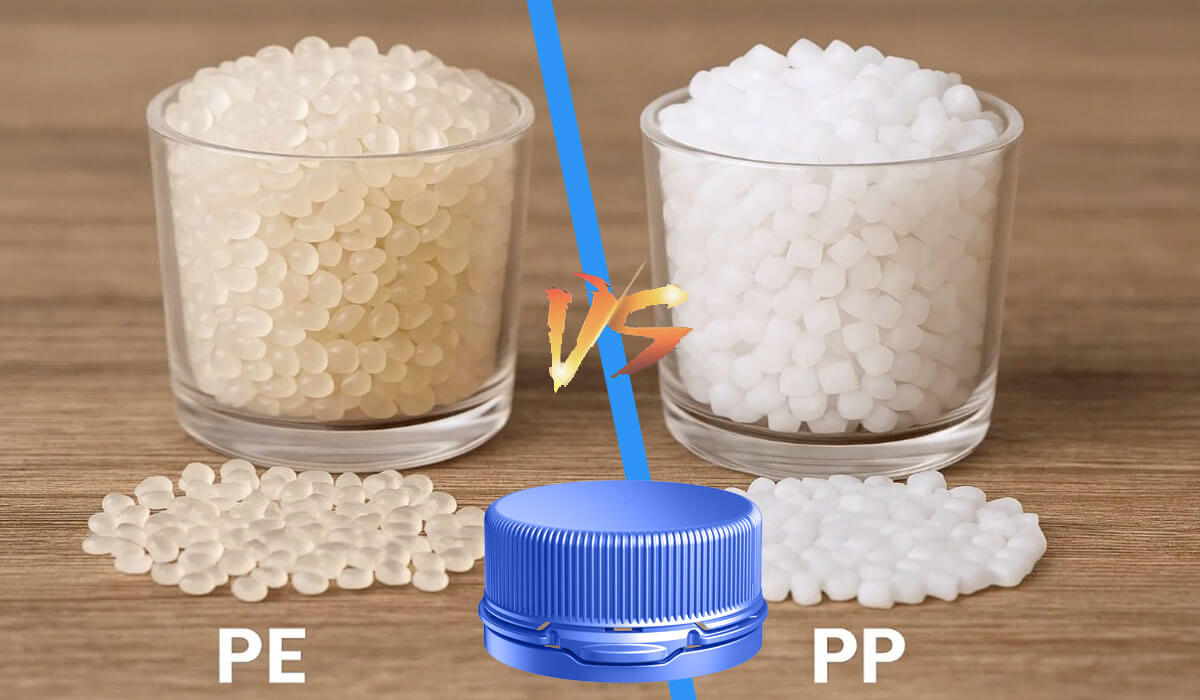
Both are widely used, cost-effective, and compatible with high-speed manufacturing. Yet they behave very differently under pressure, heat, chemicals, and torque. The real question isn’t which material is universally better — it’s which one suits your specific application, product type, and production goals.
PE and PP serve as the backbone of the closure industry, yet they are not interchangeable. Their distinct thermal tolerances and chemical resistances dictate their success in specific environments. Using a rigid PP cap on a flexible PET bottle requires different torque settings than a pliable PE closure.
This analysis covers performance data and manufacturing variables to align the selection of PE or PP caps with specific project requirements.
PE and PP bottle caps: PE vs. PP
What is Polyethylene (PE)?
Polyethylene functions as the workhorse of the closure industry due to its molecular simplicity. This polymer consists of long chains of ethylene monomers. We categorize these resins primarily by density, which dictates their performance on the production line. High-Density Polyethylene (HDPE) serves as the standard material for rigid caps. Its linear structure packs molecules closely together for maximum tensile strength.
Manufacturers favor HDPE for its balance of toughness and flexibility. The material yields slightly under torque. This elasticity allows the cap to mold itself to the bottle’s finish irregularities. It enables the mass production of one-piece closures. These designs utilize a molded-in “bore seal” or “olive” to prevent leakage. They eliminate the need for a separate liner material. Drop tests in our QC labs consistently show PE caps absorbing impact through deformation rather than cracking.
What is Polypropylene (PP)?
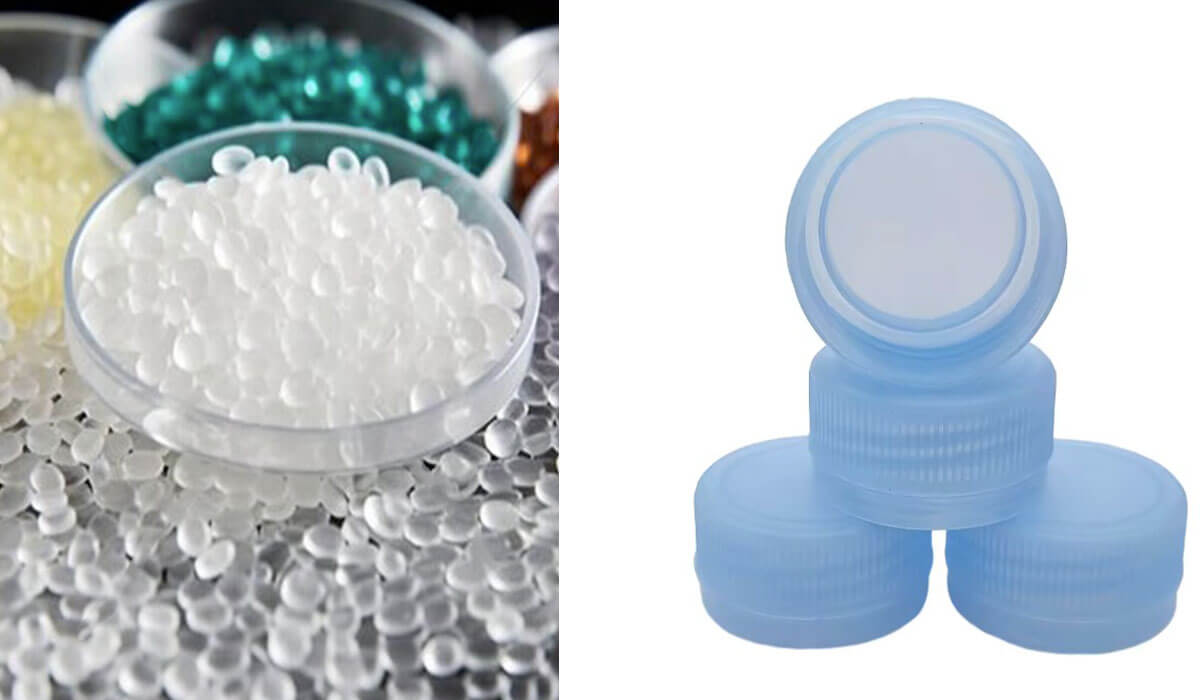
Polypropylene is a semi-crystalline thermoplastic distinguished by its methyl group arrangement. This chemical structure results in a material that is stiffer and harder than polyethylene. It also possesses a significantly higher melting point. This addition improves clarity and impact strength without sacrificing the core properties of the resin.
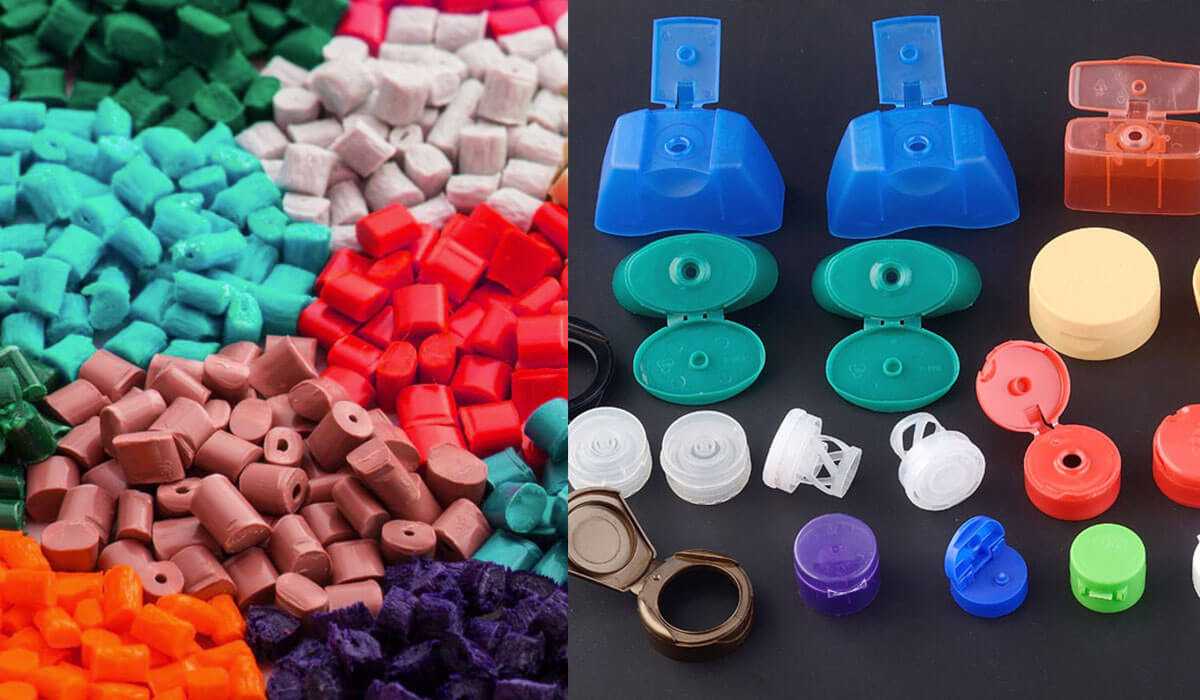
Structural integrity and fatigue resistance define PP’s role in packaging. The material exhibits a unique property when molded thin. Its polymer chains align in the direction of flow to create extreme durability. This characteristic makes PP the only viable choice for “living hinges.” These are the thin, flexible connections seen on flip-top dispensing caps. A PP hinge withstands thousands of cycles without whitening or snapping. While PE might deform permanently under such stress, PP maintains its function. This capability secures its dominance in dispensing closures, disc tops, and complex multi-component assemblies.
Key performance differences: A technical comparison
Thermal properties and heat resistance
Polypropylene (PP) dominates high-temperature applications. Its melting point ranges between 160°C and 170°C. This thermal headroom makes PP the only viable option for hot-fill beverage lines operating at 85°C or higher. It withstands sterilization cycles and autoclaving without warping. Polyethylene (PE), specifically HDPE, falters here with a melting point around 130°C. Production lines running steam sterilization must avoid PE to prevent thread deformation.
PE excels in the cold chain. High-Density Polyethylene retains impact strength down to -100°C. It resists cracking when dropped from freezer shelves. PP becomes brittle below 0°C. Impact damage during frozen transport increases significantly with PP closures. We recommend PE exclusively for cryogenic or deep-freeze storage products.
Mechanical strength and rigidity
PP offers superior rigidity and surface hardness. This stiffness ensures threads remain defined under high application torque. Capping machines can apply significant force without stripping the closure. PE behaves differently due to its semi-crystalline structure. It offers higher flexibility and elongation.
This pliability allows PE to function excellently in linerless designs. The material compresses against the bottle finish to form a hermetic seal. We often utilize a “crab claw” or plug seal design with PE to eliminate the cost of a separate liner. PP usually requires an EPE or induction liner to achieve the same seal integrity. Its hardness prevents it from conforming to minor imperfections in the bottle neck.
Chemical resistance and compatibility
Both materials resist most acids, alkalis, and salts. The critical differentiator lies in Environmental Stress Crack Resistance (ESCR). PE chains separate when exposed to aggressive surfactants like detergents, alcohols, or essential oils. This leads to cap failure during shelf storage. PP maintains structural integrity against these stress-cracking agents. We prioritize PP for household cleaners and personal care products containing strong surfactants.
HDPE outperforms PP in moisture protection. It provides a denser barrier against water vapor transmission. For dry pharmaceuticals or hygroscopic powders, HDPE remains the standard. Neither material offers a sufficient oxygen barrier for sensitive products without additional barrier layers.
The living hinge advantage
PE cannot replicate this fatigue resistance. A PE hinge whitens and eventually snaps after limited use. We strictly specify PP for any closure requiring an integral, active hinge mechanism. Attempting to mold a functional butterfly hinge out of PE results in immediate product failure.
Aesthetics and finish options
PP allows for greater visual versatility. It offers natural contact clarity and accepts high-gloss polish finishes. This transparency lets consumers see the liner or product interaction. PE naturally presents a milky, opaque appearance. It creates a matte, waxy finish that absorbs rather than reflects light.
Colors appear more vibrant in PP due to its gloss potential. PE tends to mute color intensity. Brands seeking a premium, “glass-like” aesthetic on the shelf consistently favor PP.
Manufacturing considerations
Molding processes
Our production lines run both materials daily. Processing parameters dictate your overall daily output and facility energy consumption. Polypropylene requires higher melt temperatures. We typically run PP cap injection molding between 220°C and 260°C. Polyethylene processes at much lower temperatures. A standard HDPE run requires only 160°C to 220°C.
Compression molding dominates high-volume beverage cap production. PE excels in this specific process. Its lower melt viscosity allows rapid material distribution across the mold cavity. PP requires significantly higher pressure to fill compression cavities completely.
Cycle efficiency: PE cools faster in the cap mold, enabling cycle times under four seconds; PP retains heat longer, reducing hourly throughput.
Cost analysis
Raw material pricing
Commodity markets traditionally favor Polypropylene (PP) over High-Density Polyethylene (HDPE). The price gap frequently hovers between 5% and 10% per metric ton in favor of PP. Procurement teams must track distinct feedstock drivers to forecast these variances.
- HDPE pricing: Correlates closely with natural gas markets.
- PP pricing: Tracks crude oil and naphtha trends more closely.
Oil-price spikes hit PP costs immediately, while domestic natural gas stability often insulates PE pricing; global propylene shortages add further PP supply risk.
Total cost of ownership
Unit price tells only half the financial story. Processing energy costs differ significantly between the two materials. PP requires higher melt temperatures to achieve proper flow. Our facility data indicates a 10-15% increase in electricity consumption for PP injection molding compared to PE. Cooling times for PP are also longer. This extends cycle times and reduces hourly throughput.
Scrap rates further impact the bottom line. PE possesses superior flexibility and stress crack resistance. It tolerates minor mold misalignments or aggressive ejection speeds without failing. PP is stiffer and more prone to brittleness. We frequently observe higher reject rates with PP during startup phases or high-torque capping operations.
Density differences offer a strong counter-argument for PP. PP has a specific gravity of roughly 0.90, while HDPE sits near 0.95. You produce more volumetric parts per pound of PP resin. This 5% yield advantage effectively lowers the material cost per unit. High-volume projects often leverage this density delta to offset higher energy bills.
Long-term expenses arise from system compatibility and failure modes. Mismatched thermal expansion between a PP cap and a PET bottle often creates seal failures during transport. Retail chargebacks from leaking product far outweigh fractional raw material savings. Selecting the cheaper resin initially can result in expensive field failures later.
Environmental and sustainability considerations
When choosing materials, sustainability is increasingly significant.
Recyclability
Both PE and PP are widely recyclable.
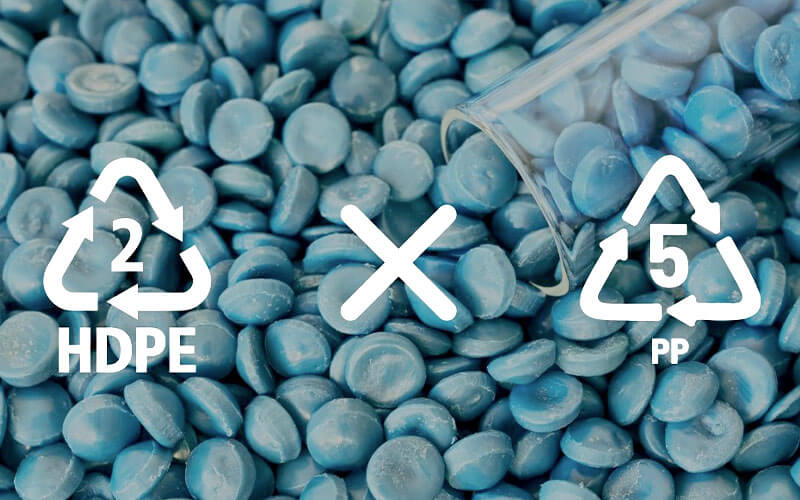
- PE: This material is commonly recycled under resin codes #2 (HDPE) and #4 (LDPE).
- PP: This material is recycled under resin code #5.
The availability of recycling infrastructure may vary by region.
Weight reduction potential
The higher stiffness of PP allows for thinner wall designs. This can reduce material use and carbon footprint.
Recycled material integration
Both materials can incorporate post-consumer recycled (PCR) material. However, PP often retains mechanical properties better at higher recycled percentages.
How to choose the right cap material for your project
Decision framework
Every packaging project demands a strict evaluation process. Define your priorities across four dimensions. These include performance, cost, sustainability, and aesthetics. Match specific material properties directly to your product requirements. Analyze the beverage type, fill process, and target shelf life. A misaligned material choice drives up wholesale rejection rates.
When to choose PE caps
PE remains the undisputed champion for high-volume cold-fill lines. Specify PE for standard beverage screw caps. It delivers exceptional performance for milk and dairy packaging. The material achieves a tight primary seal without requiring a secondary liner. This eliminates a costly manufacturing step.
Choose PE for disposable items demanding maximum cost-effectiveness. Our drop-test data confirms PE absorbs shock better than PP. It resists shattering during rough handling and pallet shipping.
When to choose PP caps
PP excels under thermal and chemical stress. Specify PP for hot-fill beverages and pharmaceutical packaging. These applications require rigorous sterilization cycles. PP withstands autoclave temperatures without warping.
Use PP for cosmetic jars and household cleaners. Aggressive chemicals cause environmental stress cracking in standard PE. PP prevents this failure mode. Complex geometries require PP. Living hinges on flip-tops and sports caps rely on its high fatigue resistance.
Industry-specific recommendations
Different sectors show clear material preferences based on production realities.
- Beverages: Evaluate your fill temperature and seal requirements. Cold-fill water lines run PE. Hot-fill juice lines require PP.
- Dairy and food packaging: PE dominates this sector. It handles cold-fill processes and standard sealing needs perfectly.
- Personal care and pharmaceutical applications: PP is the standard choice. It offers necessary sterilization compatibility and superior chemical resistance.
- Industrial and chemical packaging: PP prevents container failure. We recommend it highly for aggressive chemical exposure.
When to consider hybrid or alternative solutions
Standard single-material caps cannot solve every engineering challenge. Consider a hybrid approach for demanding applications. Combine a flexible PE liner with a rigid PP shell. This leverages the best traits of both polymers. You get a perfect seal and a durable exterior.
Explore alternative materials for extreme requirements. TPE, bio-plastics, and aluminum offer unique performance profiles. They solve strict sustainability mandates or extreme pressure requirements. Consult directly with your cap manufacturers. Share your exact production parameters so we can engineer a custom solution.
Conclusion
Choosing between PE and PP bottle caps is more than a material decision — it’s a commitment to product integrity, consumer safety, and long-term performance.
- PE: This material shines where flexibility matters most. Its outstanding impact resistance, superior tensile strength, and excellent stress crack performance make it the go-to solution for cold-fill applications and chemical packaging that demands resilience under pressure.
- PP: On the other hand, PP raises the bar for demanding environments. With its remarkable stiffness, enhanced heat resistance, and exceptional torque retention, it stands as the undisputed choice for hot-fill beverages and carbonated products where precision sealing is non-negotiable.
Ultimately, the right cap material is the one that works in perfect harmony with your product’s unique sealing, temperature, and durability requirements — protecting your brand from the very first fill to the final pour.
At GO4mould, we don’t just manufacture caps — we engineer confidence. With our one-stop service covering expert mold design, precision manufacturing, and full-scale cap production, we help you make the right material choice and bring it to life with uncompromising quality.
FAQs
- Is PP stronger than PE for bottle caps? Yes, PP is generally stiffer and structurally stronger, especially under heat and pressure.
- Which material is better for hot-fill bottles? PP performs better due to its higher heat resistance.
- Are PE caps cheaper than PP caps? PE may be slightly cheaper in raw material costs, but the total project cost depends on the design and performance requirements.
- Can both materials be recycled? Yes, both PE and PP are recyclable and are widely accepted in recycling systems.
- Which material works best for carbonated beverages? PP is generally preferred for carbonation due to its dimensional stability and torque retention.
